
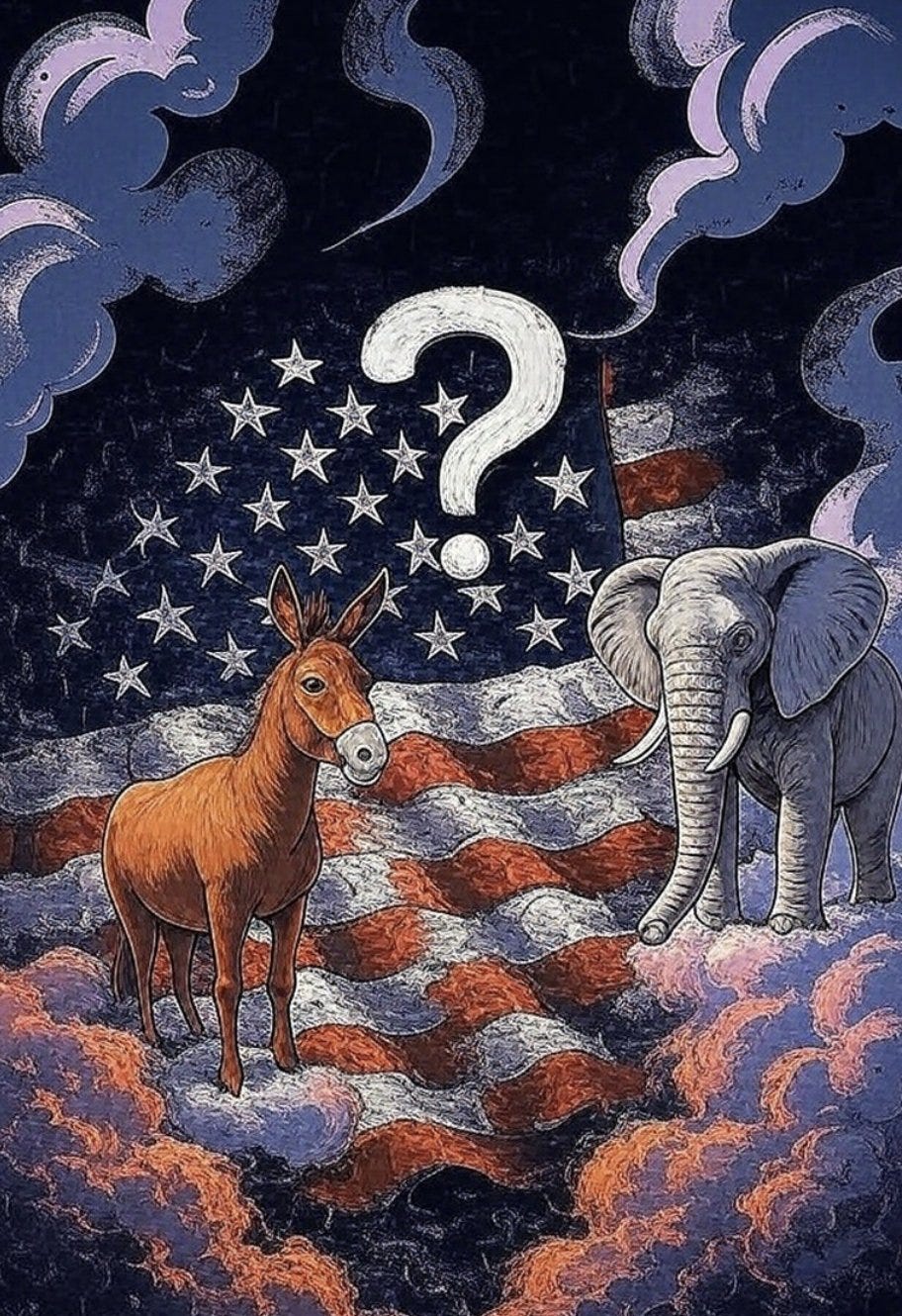
The talk of a “third party” is back in fashion, the way it always is when the public begins to taste the rot. CBS calls it curiosity — a thought experiment where voters “try to build one.” But behind that polite framing lies something far deeper: a quiet panic among Americans who no longer believe the two-party machinery serves them.
In Washington, the old guard is crumbling. The Los Angeles Times writes of efforts to unseat Nancy Pelosi — a symbolic revolt against the Democratic hierarchy that’s lost its moral compass. Fox News, predictably, calls it the party’s “dying breath.” The truth is somewhere in between: an aging apparatus refusing to die, still clutching at power through donor pipelines and procedural gamesmanship.
The establishment press treats the third-party question like a civics-class exercise. But for those inside the machine — the fundraisers, the consultants, the aides who draft the lines for the Sunday shows — it’s existential. They know the numbers. Two-thirds of Americans now say they want another choice, but the system’s architecture — the ballot access laws, the debate commissions, the money — ensures they’ll never get one.
The real story isn’t that a third party might rise. It’s that both major parties are too entrenched to allow it. The Democratic fractures — from Jean-Pierre’s defection to the generational rebellion against Pelosi — only hint at a broader disillusionment. Republicans face their own identity crisis, but they’ve learned how to weaponize chaos into control.
So America dreams of a third option, not because it believes in it, but because it has to believe in something. The illusion keeps the machine running — one more cycle, one more election, one more promise that next time, it’ll be different. It never is.