

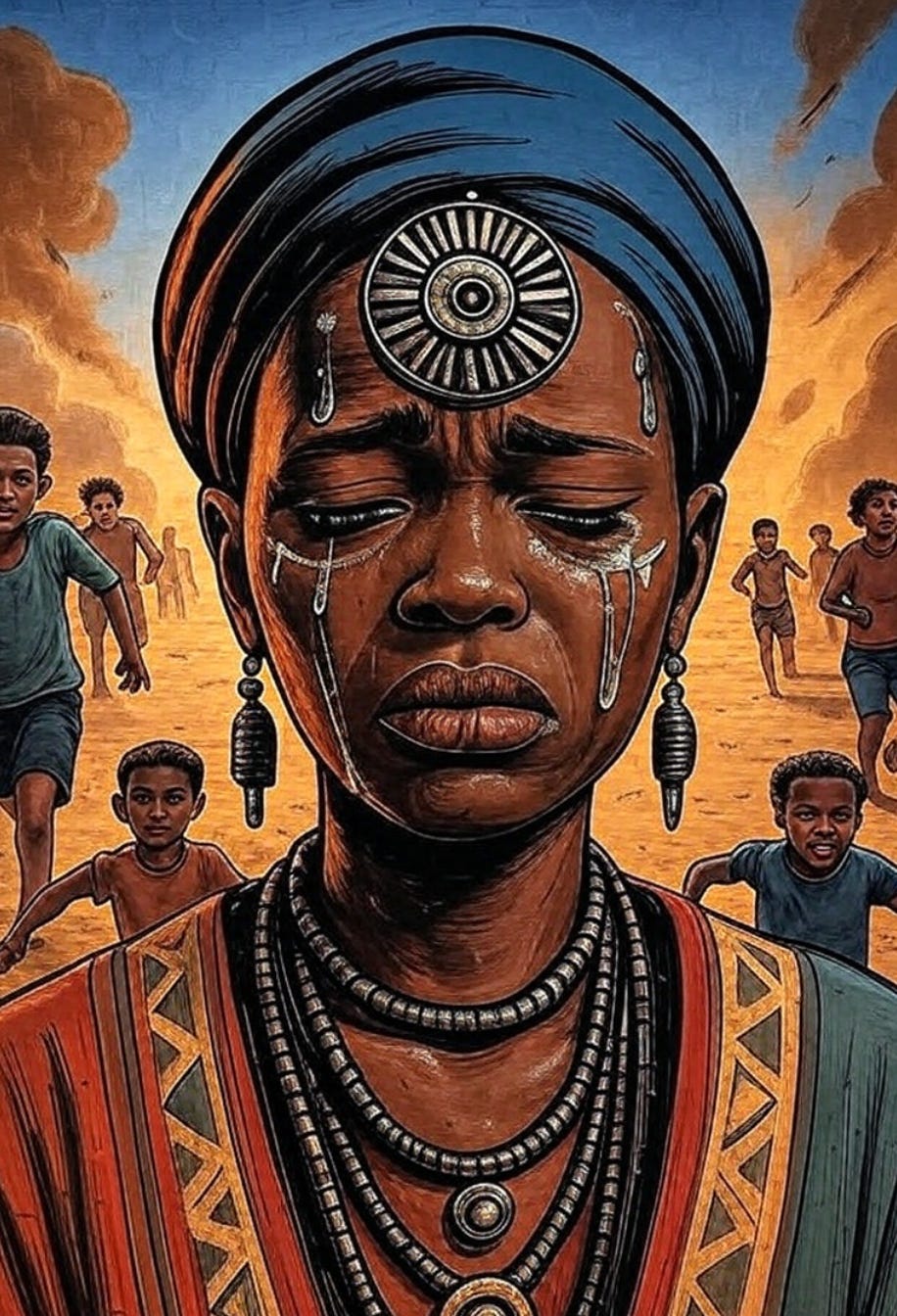
The fall of El-Fasher, Darfur’s largest city, to the Rapid Support Forces (RSF) is more than a military event—it is a moral indictment. Reports of massacres and indiscriminate killings by the RSF expose the grotesque reality of Sudan’s ongoing war, a conflict in which civilians have become expendable and international outrage is muted. In North Kordofan, the situation is no less catastrophic. Thousands flee under the shadow of RSF domination, escaping arbitrary executions, looting, and sexual violence. The Sudanese people, trapped between two predatory forces—the Sudanese Armed Forces (SAF) and the RSF—suffer in silence, bereft of food, medicine, or protection.
The RSF’s ascendance is a symptom of the wider decay of the Sudanese state. Born from the Janjaweed militias, these forces have been implicated in Darfur’s genocide for decades, yet international complicity persists. Western governments, particularly the United States, have offered a façade of concern while their policies tacitly legitimize war crimes. Sudanese voices demanding justice are drowned out by diplomatic doublespeak, leaving a nation to endure the unthinkable.
Humanitarian agencies report an alarming collapse of aid delivery. Civilians are dying not only from bullets but from hunger, disease, and exposure. Hospitals in RSF-controlled areas are overwhelmed or shuttered; children are left to scavenge. These are not collateral tragedies—they are the predictable outcomes of a war waged with impunity.
Regionally, the conflict threatens to destabilize the Horn of Africa. Refugees flood neighboring Chad, South Sudan, and Egypt, carrying trauma, disease, and the seeds of further instability. Sudan’s disintegration would reverberate across the continent, igniting old tensions and inviting foreign interference under the guise of security.
Yet the moral failure is global. The UN Security Council condemns violence in abstract terms, but no force intervenes to protect the vulnerable. Diplomacy, when it exists, is a theatre of words while the RSF consolidates control with bloodied hands. The choice is stark: act with conviction to halt massacres and demand accountability, or bear witness to a human catastrophe that history will judge as preventable. In Sudan, the world’s silence is complicit, and the slaughter continues.